
Contents
Overview
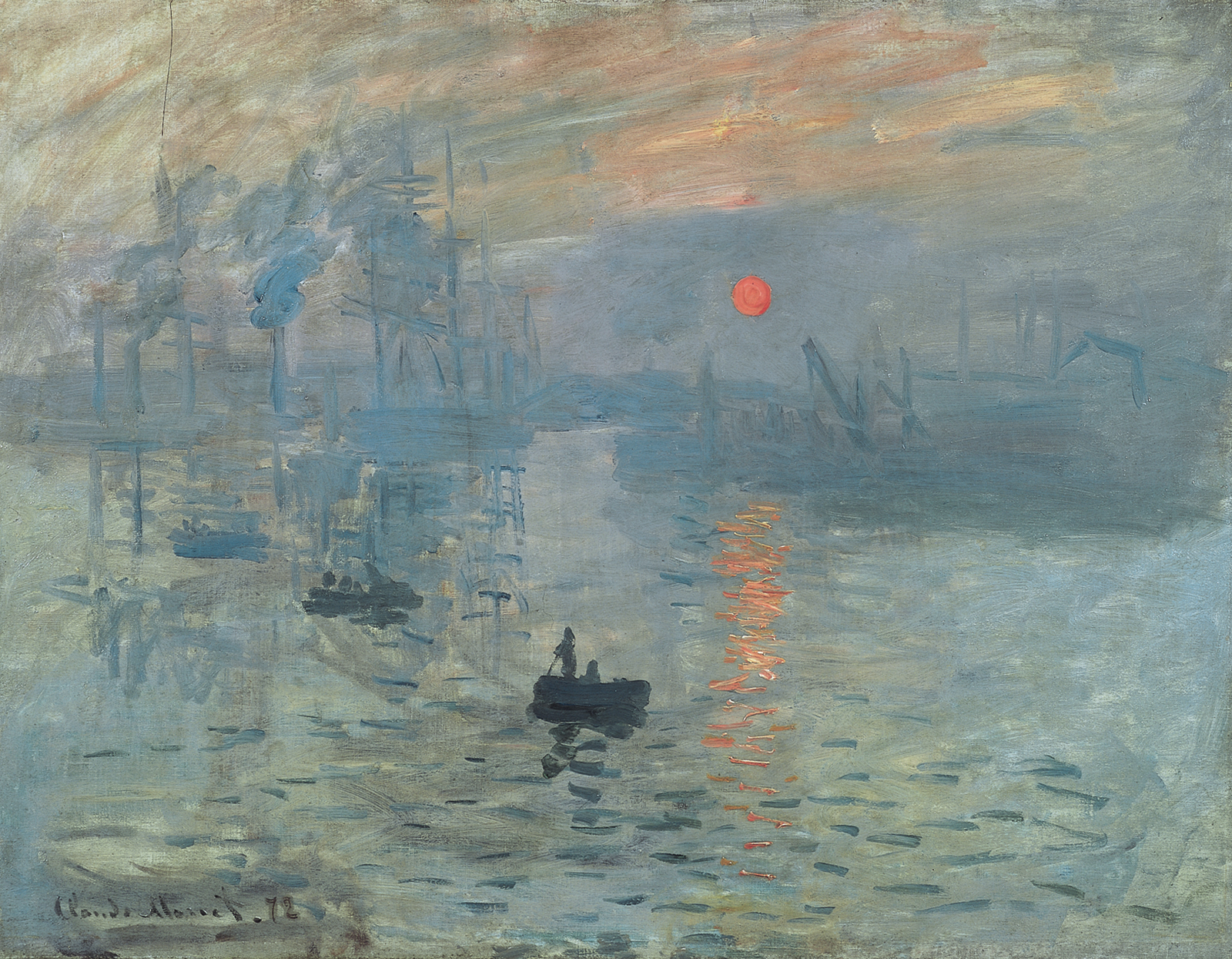
The seeds of Impressionism were sown in Paris during the 1860s, a period when the rigid doctrines of the Académie des Beaux-Arts dictated artistic taste. A generation of artists, including Claude Monet, Camille Pissarro, and Alfred Sisley, chafed under these constraints, seeking to depict the world as they saw it, rather than as they were taught to paint it. Their early exhibitions, often held independently after repeated rejections from the official Salon de Paris, began to coalesce into a distinct style. The pivotal moment arrived in 1874 with the first exhibition of the Société Anonyme des Artistes Peintres, Sculpteurs et Graveurs, where Claude Monet's painting 'Impression, soleil levant' (Impression, Sunrise) drew the ire of critic Louis Leroy, who derisively coined the term 'Impressionists.' This exhibition, featuring works by artists like Edgar Degas and Berthe Morisot, marked the public debut of a movement that would redefine Western art.
⚙️ How It Works
At its core, Impressionism is about capturing the fleeting sensation of a moment, particularly the effects of light and color. Impressionist painters employed short, broken brushstrokes to convey the vibrancy and movement of light, often applying unmixed colors side-by-side on the canvas, allowing the viewer's eye to blend them optically. This technique created a sense of immediacy and spontaneity, moving away from the smooth, polished finish favored by academic painters. Compositions often featured unusual angles and cropped perspectives, influenced by Japanese prints and photography, further emphasizing the subjective, momentary nature of perception. The subject matter shifted from historical or mythological scenes to everyday life: Parisian boulevards, rural landscapes, intimate domestic interiors, and portraits of ordinary people, as seen in works like Renoir's 'Bal du moulin de la Galette.'
📊 Key Facts & Numbers
The Impressionist movement, though relatively short-lived in its initial cohesive form, produced a significant body of work and influenced countless artists. Today, Impressionist paintings command astronomical prices; Claude Monet's 'Meules' (Haystacks) series sold for over $110 million in 2019, and Renoir's 'Bal du moulin de la Galette' is valued in the hundreds of millions. The movement's impact is evident in the fact that over 50% of major museum collections worldwide feature Impressionist or Post-Impressionist works, with an estimated 20 million visitors annually viewing these pieces in institutions like the Musée d'Orsay in Paris and the Metropolitan Museum of Art in New York.
👥 Key People & Organizations
The key figures of Impressionism are a constellation of groundbreaking artists who defied convention. Claude Monet is perhaps the most iconic, relentlessly pursuing the depiction of light and atmosphere, particularly in his series of paintings of Rouen Cathedral and his water lilies at Giverny. Pierre-Auguste Renoir focused on capturing the joy of life and the sensuousness of human form, often in vibrant social settings. Edgar Degas brought a unique perspective with his studies of dancers and racehorses, emphasizing line and composition. Camille Pissarro, often considered the 'dean' of Impressionism, was a mentor to many and consistently explored rural and urban landscapes. Berthe Morisot and Mary Cassatt, two of the few prominent female Impressionists, brought intimate portrayals of women and children to the forefront, challenging societal norms within the art world.
🌍 Cultural Impact & Influence
The cultural reverberations of Impressionism extend far beyond the art world, fundamentally altering visual perception and influencing subsequent artistic movements. Its emphasis on subjective experience and the ephemeral nature of reality paved the way for Post-Impressionism, Fauvism, and Cubism. The Impressionists' liberation of color and brushwork inspired not only painters but also photographers and filmmakers to explore new ways of capturing light and movement. The very idea of an 'impression'—a subjective, personal take on reality—permeated literature and music, encouraging artists across disciplines to experiment with form and narrative. The movement's enduring popularity is a testament to its ability to connect with viewers on an emotional level, offering a window into a specific time and place while speaking to universal human experiences of light, color, and fleeting moments.
⚡ Current State & Latest Developments
While Impressionism as a cohesive movement peaked in the late 19th century, its legacy continues to evolve and resonate. Contemporary art often engages with Impressionist principles, whether through direct homage, critical reinterpretation, or the application of its techniques to new media. Digital art and generative AI, for instance, can now simulate Impressionist brushwork and color blending with astonishing fidelity, raising questions about authorship and originality. Exhibitions dedicated to Impressionism and its related artists, such as the major Sorolla retrospective in Toulouse and upcoming Paris shows, continue to draw massive crowds, indicating a persistent public fascination. Furthermore, ongoing scholarly research, often utilizing advanced imaging techniques, continues to uncover new insights into the materials and methods employed by the original Impressionists, such as the analysis of pigment degradation in Monet's works.
🤔 Controversies & Debates
Impressionism was not without its detractors. The initial reception was overwhelmingly negative, with critics like Louis Leroy dismissing the works as unfinished sketches or mere 'impressions' lacking proper technique and detail. The Académie des Beaux-Arts and its supporters viewed the Impressionists as rebels who threatened the established order of art. Debates also arose within the movement itself; Edgar Degas, for instance, often clashed with Monet over the emphasis on landscape and light, preferring to focus on line, composition, and urban subjects. Later criticisms sometimes questioned the movement's perceived superficiality or its focus on bourgeois leisure, arguing that it overlooked the social and political turmoil of the era. The very definition of 'Impressionism' remains a point of discussion, with scholars debating the precise boundaries of the movement and the extent to which artists like Paul Cézanne and Georges Seurat, often categorized as Post-Impressionists, were either extensions of or reactions against its core tenets.
🔮 Future Outlook & Predictions
The future of Impressionism lies not just in its continued exhibition and appreciation, but in how its core tenets—capturing subjective experience, the play of light, and the essence of a moment—are reinterpreted through new technologies and artistic perspectives. We might see AI-generated art that pushes the boundaries of Impressionist aesthetics, creating entirely new visual languages that are still rooted in the optical principles pioneered by Monet and his contemporaries. Furthermore, as global art markets expand, there's potential for increased recognition of Impressionist-adjacent movements from non-Western cultures that explored similar themes of light and subjective perception. The ongoing scholarly analysis of pigments and techniques may also lead to a deeper understanding of the artists' material processes, potentially influencing conservation efforts and even contemporary artistic practices seeking to emulate historical methods.
💡 Practical Applications
While Impressionism is primarily associated with painting, its principles have found applications and resonance in various fields. The concept of capturing a fleeting moment and emphasizing subjective perception is mirrored in early cinematography, where directors experimented with camera angles and lighting to evoke
Key Facts
- Category
- art
- Type
- topic