
Contents
- 🎵 Origins & Historical Threads
- ⚙️ Methodologies and Frameworks
- 📊 Key Statistics and Trends
- 👥 Foundational Thinkers and Modern Scholars
- 🌍 Global Religious Landscapes
- ⚡ Contemporary Dynamics and New Forms
- 🤔 Debates on Secularization and Sacredness
- 🔮 Future Trajectories of Faith and Society
- 💡 Societal Functions and Applications
- 📚 Pathways to Deeper Understanding
- References
Overview
The systematic study of religion through a sociological lens emerged in the late 19th and early 20th centuries, coinciding with the formalization of sociology as an academic discipline. Early thinkers grappled with understanding the persistent presence and power of religious belief in societies undergoing rapid industrialization and secularization. Émile Durkheim's seminal work, "The Elementary Forms of Religious Life" (1912), posited that religion's primary function was to foster social solidarity, with collective rituals reinforcing shared values and group identity. He famously argued that even seemingly mundane objects could become sacred through collective effervescence, a concept that highlights the social construction of the sacred. Concurrently, Karl Marx viewed religion as an "opiate of the masses," a tool used by the ruling class to pacify the oppressed by offering otherworldly solace, thereby hindering revolutionary change. Max Weber, in contrast, explored how religious ideas, particularly the Protestant ethic, could profoundly influence economic development, suggesting a more complex, reciprocal relationship between religion and socioeconomic structures. These foundational perspectives established the core questions that continue to animate the field.
⚙️ Methodologies and Frameworks
Sociologists of religion employ a diverse toolkit to dissect religious phenomena, mirroring the broader methodological spectrum of sociology. Quantitative approaches often involve analyzing large-scale survey data, census information, and public opinion polls to identify patterns in religious affiliation, practice, and belief across different demographics and regions. For instance, researchers might track the decline or rise of specific denominations using data from organizations like the Pew Research Center. Qualitative methods, conversely, offer rich, in-depth understanding through techniques such as participant observation in religious communities, in-depth interviews with believers and leaders, and the archival analysis of religious texts and historical documents. This allows scholars to explore the lived experiences of faith, the nuances of ritual performance, and the internal dynamics of religious organizations, providing context that numbers alone cannot capture. The integration of both methods, as advocated by scholars like Peter L. Berger, offers a more comprehensive picture of religion's multifaceted role in society.
📊 Key Statistics and Trends
Global religious demographics present a complex and evolving picture, far from a simple narrative of decline. While Western Europe has seen significant secularization, with only about 30% of adults identifying with a religion in some countries, other regions are experiencing robust religious growth. India remains overwhelmingly religious, with over 80% of its population adhering to faiths like Hinduism and Islam. Sub-Saharan Africa is a global hub for religious vitality, with Christianity and Islam experiencing rapid expansion, often intertwined with local traditions. The United Nations estimates that by 2050, the world's religious population will reach 7.3 billion, with Christianity and Islam remaining the two largest faiths, each projected to surpass 2.5 billion adherents. The rise of Evangelical Christianity in Latin America and Asia, and the growing influence of Shia Islam and Sunni Islam in the Middle East and Southeast Asia, highlight the dynamic shifts in global religious adherence and practice.
👥 Foundational Thinkers and Modern Scholars
The intellectual lineage of the sociology of religion is marked by towering figures whose insights continue to shape contemporary discourse. Beyond the "founding fathers"—Émile Durkheim, Karl Marx, and Max Weber—scholars like Georg Simmel explored the sociology of the stranger and its implications for religious minorities, while Edward Shils examined the concept of civil religion. In the mid-20th century, Peter L. Berger offered influential analyses of secularization and the social construction of reality in religious contexts. More recent scholarship includes the work of José Casanova, who critically examined secularization theory and the public role of religion, and Nancy Ammerman, known for her extensive research on religious pluralism and the lived experiences of American congregations. Contemporary researchers also engage with the work of Talal Asad on the anthropology of religion and the critique of secularism, pushing the boundaries of how we understand faith in the modern world.
🌍 Global Religious Landscapes
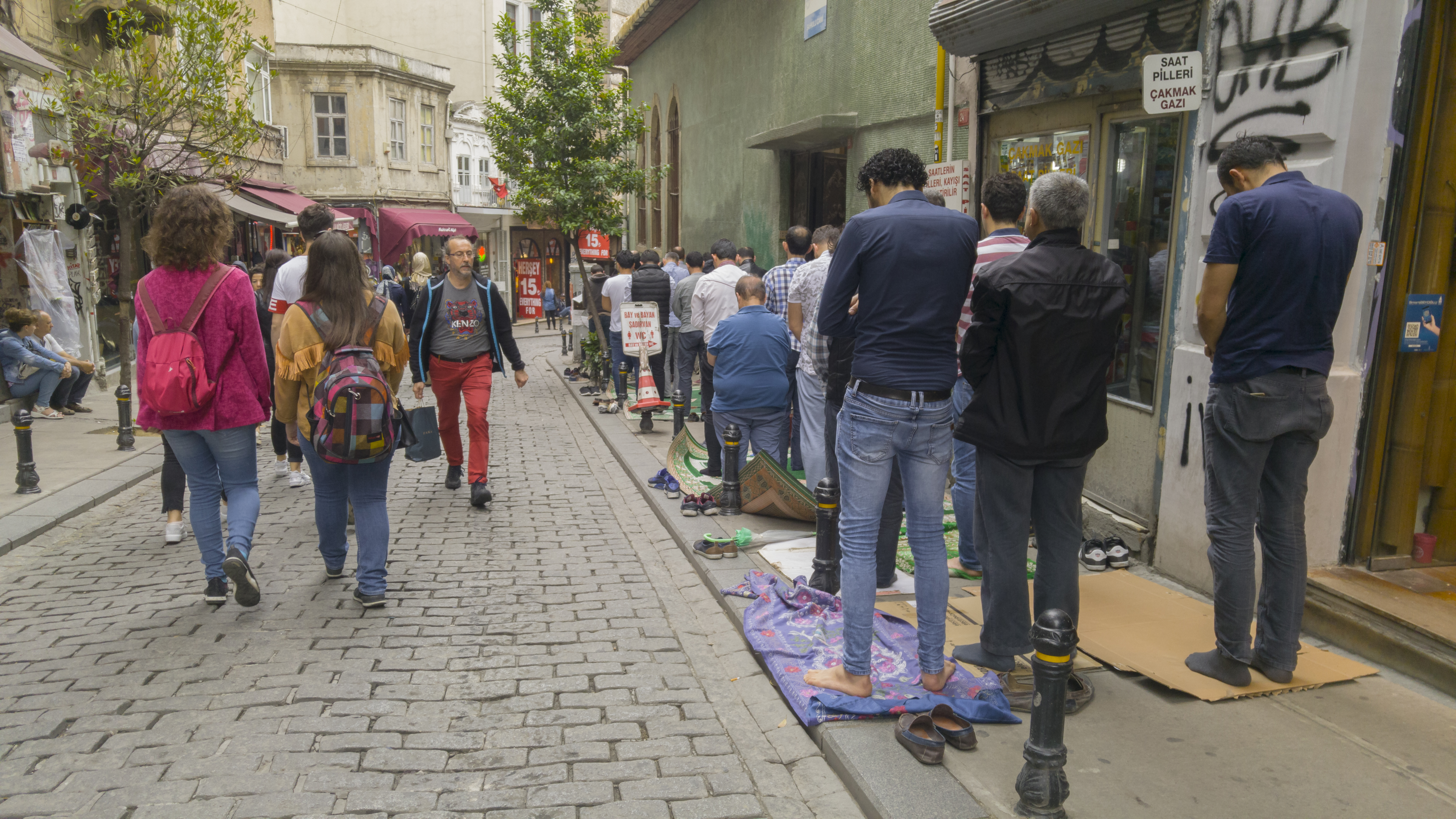
Examining religion globally reveals a stunning diversity of practices, beliefs, and institutional forms, often deeply interwoven with local cultures and histories. In Japan, Shinto and Buddhism coexist, with many individuals participating in rituals from both traditions, reflecting a syncretic approach to the sacred. The vibrant Pentecostal movement in Brazil has become a dominant religious force, often integrating elements of African diasporic religions like Candomblé. In Indonesia, the world's most populous Muslim-majority nation, diverse interpretations of Islam, from Sufism to more reformist movements, shape daily life. The resurgence of Sikhism as a distinct religious identity in the Indian subcontinent and its diaspora, and the enduring presence of Judaism across continents, underscore how religious traditions adapt and persist, often in dialogue with or in tension with surrounding societies.
⚡ Contemporary Dynamics and New Forms
The 21st century is witnessing the emergence of novel religious and spiritual expressions, challenging traditional categories. The rise of the "nones"—individuals unaffiliated with any organized religion—is a significant trend, particularly in Western nations, yet this does not necessarily signify a decline in spirituality. Many "nones" engage in "spiritual but not religious" practices, seeking personal meaning through mindfulness, yoga, or eclectic belief systems often facilitated by digital platforms like Instagram and YouTube. The growth of New Age spirituality and the increasing visibility of Buddhism and Hinduism in Western contexts also point to a fluid religious landscape. Furthermore, the intersection of religion and technology is creating new forms of community and practice, from online congregations to virtual reality religious experiences, blurring the lines between the physical and digital sacred.
🤔 Debates on Secularization and Sacredness
One of the most enduring debates in the sociology of religion revolves around secularization theory, which posits a long-term decline in the influence of religion in modern societies. While historical trends in Western Europe, such as declining church attendance and the privatization of faith, seem to support this, the picture is far more complex globally. Scholars like José Casanova have critiqued the Eurocentric assumptions of secularization, pointing to the continued vitality and public role of religion in many parts of the world, including the Americas and Asia. The debate also extends to the definition of "religion" itself, with some arguing that even secular ideologies and practices can function as "civil religions" or possess sacred qualities. The question remains: is religion truly disappearing, or is it transforming into new, perhaps less visible, forms?
🔮 Future Trajectories of Faith and Society
The future of religion in society is a subject of intense speculation, with several potential trajectories emerging. One possibility is a continued, albeit uneven, secularization in some regions, leading to a more pluralistic and individualized spiritual marketplace. Conversely, we might witness a resurgence of religious fundamentalism or a strengthening of religious identities as a counter-reaction to globalization and perceived moral decay
Key Facts
- Category
- culture
- Type
- topic